


You’ve decided it’s time to invest in branding for your small business. You search online for pricing, and suddenly you’re drowning in vague answers, wildly different numbers, and agency websites that won’t quote anything without a discovery call. Sound familiar?
The truth is, finding honest information about branding services costs in Scotland is genuinely difficult, and that confusion causes many small business owners to delay a decision that could transform how their business is perceived. That’s exactly why this guide exists.
Here, we’re cutting through the noise with transparent, realistic pricing information built around one simple idea: understanding what drives cost matters more than knowing a single number. We’ll walk you through what branding actually includes, how costs break down across different budget levels, and what separates a freelancer quote from an agency proposal. You’ll also learn how to read a branding proposal confidently, what to expect from the Scottish market specifically, and how to stretch your budget without compromising on quality.
Whether you’re starting from scratch or finally ready to take your brand seriously, this guide will help you move forward with clarity.
Why Branding Costs Are So Hard to Pin Down
If you’ve ever tried to Google “how much does branding cost” and come away more confused than when you started, you’re not alone. Most agencies and freelancers don’t publish their prices, and that’s not because they’re hiding something. It’s because branding projects vary so dramatically in scope, deliverables, and complexity that a single price list would be almost meaningless.
The gap between a £500 logo and a £25,000 full brand identity project is real, and the difference isn’t simply quality. It’s what’s actually included. One is a graphic file. The other is a complete brand system: strategy, visual identity, messaging, and documentation that tells everyone who ever works on your brand exactly how to use it. Comparing the two is a bit like comparing a front door to a fully built house.
This is where Scottish small business owners often run into trouble. When you gather two or three quotes and one comes in at £800 and another at £6,000, it’s easy to assume the expensive one is overpriced. But in many cases, those quotes aren’t for the same thing at all. One might cover a logo file; the other might include brand guidelines, typography, colour systems, and a discovery process. You’re comparing apples to oranges without realising it.
The hourly rate data tells a similar story. According to Clutch’s 2026 pricing data, branding agency services average £75 to £112 per hour across disciplines including brand strategy, messaging, naming, and corporate branding. That’s useful context, but hourly rates alone don’t tell you what you’re buying or how many hours a project actually takes.
If you’re still figuring out whether you need an agency at all, a plain-English overview of what a creative agency actually does and whether your business needs one is a good place to start.
This guide focuses on what drives cost, not just what cost to expect, so you can read any proposal with confidence and make a decision that’s right for your business.
What Branding Actually Includes (and What It Doesn’t)
So, what exactly is “branding”? The word gets used loosely, and that’s part of why quotes vary so wildly.
Brand identity is the visual layer: your logo, colour palette, typography, and overall visual style. These are the tangible deliverables most people picture when they think about branding. Our logo design and branding services cover exactly this, but it’s worth understanding where identity ends and the broader brand picture begins.
Brand strategy is the thinking underneath the visuals. It defines your positioning, your values, your tone of voice, and how you want customers to perceive you. Strategy is where a branding project tends to spend the most time, and consequently, where a significant portion of the cost sits. Without it, visual work can look polished but feel disconnected from what your business actually stands for.
Brand guidelines are the document that holds everything together. A thorough set typically runs to dozens of pages, specifying exactly how your logo should be used, which colours are acceptable, how your fonts are applied, and how your brand sounds in writing. Anyone who works on your brand in future, whether a web designer, printer, or social media manager, uses it as their reference point. Lower-budget projects often skip guidelines entirely, which becomes expensive later when inconsistency creeps in.
Naming, messaging, and strapline development are separate deliverables altogether. If you need help deciding what to call a product, crafting your core marketing messages, or developing a tagline, that work adds to the scope and the cost of any project.
Here is the most important distinction of all: a logo is not a brand. Many small businesses receive a quote for logo design, approve it, and consider their branding complete. What they have is one asset, not a system. Understanding the difference means you can evaluate what any proposal actually covers, rather than comparing prices for things that are not remotely equivalent.
Branding Cost Tiers: What You Actually Get at Each Level
Now you know what branding actually includes, the next logical question is: what does it cost? Here is a straightforward breakdown of the four main price tiers and what each one realistically delivers.
Under £1,500: Entry-level
At this budget, you are typically getting a standalone logo, a couple of revision rounds, and not much else. No brand guidelines, no strategy, no supporting visual system. That is fine if you are a sole trader testing an idea and just need something presentable to get started. It is not a foundation you can build long-term recognition on.
£2,000–£5,000: Mid-range
This tier usually comes from a freelancer or small studio and adds some substance around the logo: a defined colour palette, typography choices, and basic usage rules. It is a reasonable starting point for an established small business working with a tight budget, provided you go in with clear expectations about what is and is not included.
£8,000–£25,000: Foundational branding
This is the bracket where professional business branding services genuinely begin. You are getting brand strategy, a full visual identity, and brand guidelines running to usually more than a dozen pages, often with messaging or tone of voice work included. According to Clutch’s pricing data, this is where established branding agencies typically operate. For most Scottish small businesses serious about growth, this is the tier worth planning towards.
£25,000–£40,000 and above: Comprehensive projects
This covers full-scale rebrands and complex brand systems for businesses with multiple product lines, franchise operations, or high-volume marketing output. Less common for Scottish SMBs, but relevant if your business is scaling quickly.
The question to ask at every tier
Price alone tells you very little. The useful question is: what am I actually getting, and what will I be able to do with it once the project is finished? A £1,500 logo file and a £15,000 brand system are not different versions of the same thing. They are different things entirely.
The Real Cost Drivers Behind Any Branding Quote
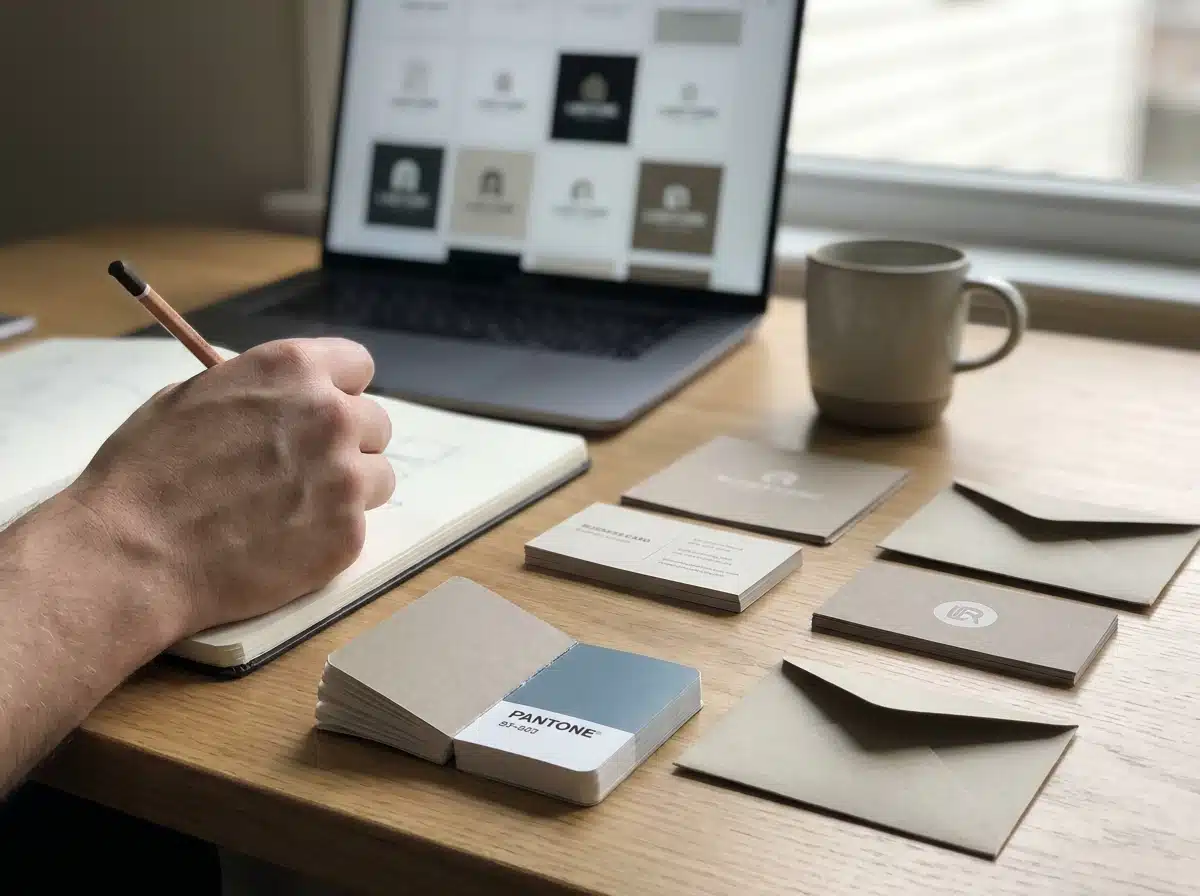
Now you know what different budget tiers cover, it’s worth understanding why two quotes for ostensibly the same thing can differ by thousands of pounds. These are the variables that move the needle most.
Deliverables: more assets mean more time
A logo is one asset. A full brand identity system, covering primary and secondary logo variations, a sub-mark, colour palette, typography pairing, photography style direction, and a set of brand icons, can easily involve ten or more individual deliverables. Each one requires design time, refinement, and sign-off. If you’re unsure what any of those terms mean in practice, a plain-English overview of what a graphic designer actually does is a useful starting point before you request quotes.
Revision rounds: more is not always better
Most fixed-price branding projects include a defined number of revision rounds — commonly two or three, though this varies by provider. “Unlimited revisions” sounds appealing, but it often leads to scope creep, where small additional requests accumulate until the project has doubled in size. It also creates vague timelines. A defined number of focused revision rounds, used well, is genuinely sufficient for most small business branding projects.
Brand guidelines depth: the detail matters
As covered above, guidelines depth varies enormously — and so does the time required to produce them.
Strategy vs. execution: skipping discovery costs you later
Projects that include a discovery session, competitor review, and brand positioning work cost more upfront. But execution-only projects, where a designer works purely from a brief without strategic input, frequently miss the mark and require expensive revisions or early rebrands.
Timeline and urgency
Projects can take several weeks to a few months depending on scope. If you need work completed in three weeks for a product launch, most studios will apply a rush fee. Build realistic lead time into your planning.
Number of stakeholders
The more people with sign-off authority on your side, the more revision cycles tend to follow. Managing internal feedback before submitting each round will protect both your timeline and your included revisions.
Branding Agency vs. Freelancer: Which Is Right for Your Business?
Once you understand what drives the cost of a branding project, the next question is usually: who should actually do the work?
Freelancer or agency is one of the most common dilemmas for Scottish small business owners, and the honest answer is that neither is universally better. The right choice depends on what your project actually involves.
The case for a freelancer
A skilled freelancer will typically cost meaningfully less than an agency — often by a significant margin — for comparable deliverables. If your budget is tight and your scope is focused, that saving is real and meaningful. A strong logo, a defined colour palette, and basic typography guidance are all well within reach from an experienced independent designer.
The limitation is capacity. A single person can only manage so many disciplines at once. If your project needs brand strategy, visual identity, copywriting, and photography direction all moving forward in parallel, a solo freelancer will struggle to keep pace without something slipping. That is not a criticism; it is simply a structural reality.
The case for a branding agency
Branding agency services bring a team of specialists together under one roof. A strategist handles positioning; a designer builds the visual identity; a copywriter shapes the tone of voice. You deal with one point of contact, and the coordination happens internally rather than landing on you.
For Scottish small businesses, working with a local agency adds something that is harder to put a price on: genuine familiarity with the regional market. A Glasgow or Lanarkshire agency understands local competitors, the audiences you are trying to reach, and the cultural context that shapes how your brand will land. That kind of insight rarely comes from a generalist freelancer working remotely from elsewhere in the UK. It is the same reason small business owners sometimes investigate what a social media agency actually does before deciding whether to bring in specialist support or manage things themselves.
A practical rule of thumb
If your project is limited to a clean logo and basic visual identity, a skilled freelancer is a perfectly viable choice.
If it involves brand guidelines, tone of voice, or any kind of strategic positioning work, an agency or studio is better placed to deliver consistently across every element.
The goal is not to find the cheapest option. It is to match the provider to the scope of what you genuinely need.
Why Brand Guidelines Are Worth Paying For
Whichever route you choose, agency or freelancer, one deliverable will determine how much long-term value you extract from the investment: brand guidelines.
Brand guidelines — introduced in the section above — deserve a closer look at why they’re worth the cost.
The problem with skipping them becomes obvious the moment you start briefing other people. Without guidelines, every designer, social media manager, or local print shop will interpret your brand differently. One uses the wrong shade of blue. Another picks a font that clashes with your logo. A third writes copy that sounds nothing like you. Individually, these feel like small issues. Over time, they accumulate into a brand that looks inconsistent and, as a result, feels less trustworthy. Research suggests consistent brand presentation can increase revenue by up to 23%, and boost customer trust by 33%. Inconsistency works in the opposite direction.
For Scottish small businesses working with local suppliers, a clear set of guidelines pays for itself quickly. Instead of spending time correcting every new freelancer or briefing your web designer from scratch, you hand over the document and the work comes back on-brand. Fewer revisions means lower costs on every future project.
That is why brand guidelines are best understood as a one-off investment with repeated returns. Every new marketing campaign, every new team member, every agency or printer you brief in future benefits from them. You pay for them once; they work for you for years.
When you are reviewing branding proposals, always check explicitly whether guidelines are included, and ask what level of detail they cover. A single-page style sheet is not the same as a proper guidelines document. This one detail is often what separates a branding project that holds its value from one that needs redoing within two years. If you want to understand more about what professional brand documentation should include, a plain-English overview of what graphic design really covers and why it matters for small businesses is worth a read.
Ask your provider whether brand guidelines are included as standard — at Click Success, this is a conversation we have with every client at the outset so there are no surprises.
How to Read a Branding Proposal Without Being Caught Out
So you’ve got a proposal in front of you. Before you decide purely on price, it’s worth spending ten minutes reading it carefully, because the detail (or lack of it) tells you a great deal.
Start with the deliverables list. If a proposal says “logo design” and nothing else, that’s a red flag. A properly scoped project will specify file formats (PNG, SVG, PDF at minimum), the variations included (full colour, single colour, reversed for dark backgrounds), and who owns the files once the project is complete. If any of those aren’t mentioned, ask before you sign. You’ll find a breakdown of what a well-structured branding project should include in our process of Logo Design and Branding.
Check the revision policy closely. Most fixed-price projects include a defined number of revision rounds — commonly two or three, though this varies by provider. What you need to understand is how the provider defines a “revision” versus a “new direction,” and what happens if you exceed the included rounds. Additional rounds typically attract extra fees, so knowing this upfront helps you manage feedback efficiently.
Look for a discovery or briefing phase. If a proposal jumps straight to design work with no mention of an initial brief, questionnaire, or consultation, that’s worth querying. Projects without a proper discovery phase often end up misaligned with what the client actually wanted, leading to more revision rounds and a final result that doesn’t quite fit.
Clarify the brand guidelines situation. Check what format they’ll take. A PDF document, an online brand portal, and a printed guide are all different things with different levels of usefulness depending on how your business operates.
Ask about intellectual property. Some contracts transfer full ownership of your logo and brand files only on final payment. That’s not unusual, but it’s worth knowing upfront. Once IP transfers, you should receive all working files, not just flattened exports.
Finally, compare proposals on scope rather than headline price. Two quotes can differ by thousands of pounds and still be entirely fair, because they’re quoting for completely different things. A cheaper proposal that excludes guidelines, strategy, and proper file delivery may cost you more in the long run once those gaps need filling.
Branding in Scotland: What to Expect from the Local Market
Once you’ve got a clear sense of how to read a proposal, it helps to understand the market you’re buying into.
Scotland has a well-established creative and digital agency sector, with Glasgow and Edinburgh both home to a strong concentration of providers. These range from one or two-person boutique studios to full-service digital agencies offering brand identity services alongside web design, copywriting, and marketing. The Central Belt, in particular, has a genuine depth of talent and experience across branding disciplines.
On pricing, Glasgow agencies broadly track UK regional rates. You’ll typically pay less than you would with a London-based agency, but not dramatically less for quality work. Overheads and skilled staff cost money wherever you are, and a well-run Scottish studio doing thorough strategic work will charge accordingly. The gap is meaningful, but it’s not a discount market.
Where Scottish agencies genuinely add value is in local knowledge. A business in hospitality, trades, retail, or professional services is operating in a specific competitive environment, with a specific customer base. An agency that understands the Scottish market, knows the regional landscape, and has worked with similar businesses nearby brings context that a generalist provider elsewhere may not. That contextual knowledge tends to show up in the quality of brand strategy work, not just the visual output.
Geography is less of a constraint than it once was. Remote and hybrid working means a business in Lanarkshire, Stirling, or Ayrshire can engage a studio based in Glasgow or Edinburgh without any practical barrier, and without paying a premium that once came with city-centre agencies. If you’d like a broader sense of what to look for when choosing a local digital partner, a plain-English overview of what Glasgow businesses should look for in a web design agency covers similar ground from a web design angle.
When comparing quotes from Scottish providers, prioritise transparency in pricing, a portfolio showing work for businesses of a similar scale to yours, and evidence that they think strategically, not just visually.
How to Get the Most Value From Your Branding Budget
Once you’ve found a provider you trust, how you manage the project from your side has a direct bearing on what you spend.
Write a proper brief before you make contact. The more clearly you can describe your target audience, your competitors, and what you want people to feel when they encounter your brand, the less time an agency needs to spend in discovery. Discovery time is billable time. A well-prepared brief can meaningfully reduce the hours a project requires before a single design has been produced.
Prioritise deliverables that will still be working for you in five years. Your logo, brand guidelines, and core colour and typography systems are the foundations everything else sits on. Bespoke illustration sets and motion graphics are appealing but tend to see limited use after the initial launch. If budget is limited, build the foundations properly first and treat supplementary assets as future additions.
Manage your revision rounds carefully. Consolidate all internal feedback before each submission — this prevents draining your included rounds on piecemeal comments.
Consider a phased approach if cash flow is a concern. Starting with a strong foundational identity, logo, guidelines, colour, and type, gives you something credible to trade on immediately. Brand strategy and messaging work can follow in a second phase once your business can absorb the cost comfortably. A phased project planned from the outset is more cost-effective than two separate projects commissioned independently later.
Ask whether the agency also builds websites. If a rebrand and a new website are both on your to-do list, commissioning both from the same provider, as Click Success handles for clients across Scotland, typically reduces total cost and guarantees that your site and your brand identity are built to work together from day one.
So, What Should You Budget for Branding?
Once you’ve worked through scope, deliverables, and how to get the most from your budget, the question becomes straightforward: what number do you actually put in the plan?
For foundational branding from a professional agency, including brand strategy, logo design, and full brand guidelines, £8,000 to £25,000 is the realistic range for a Scottish small business. That bracket reflects the time, expertise, and deliverable depth required to build a brand system that holds up consistently across every touchpoint.
If your budget sits below that, a freelancer-led project can still produce a clean logo and basic visual identity, typically well below the agency range. That is a legitimate starting point, particularly for sole traders or early-stage businesses. Just be clear-eyed about what is and is not included; brand guidelines and strategic positioning work are rarely part of a package at that price point.
Before you contact anyone, define your scope. What deliverables do you actually need? What is your timeline? Where will this brand appear, on a website, in print, on social media, across a vehicle fleet? The answers to those questions shape the brief, and a clear brief is what separates a focused proposal from a vague one that invites cost surprises later.
One thing worth holding onto: price should never be the only factor. A rebrand that lacks guidelines, does not reflect your business accurately, or falls apart when applied to real materials will cost more to fix than getting it right the first time. Cheap work redone is expensive work.
If you are a Scottish small business weighing up what a professional brand identity could realistically look like for your budget, the team at Click Success is happy to have that conversation. No jargon, no pressure; just a straightforward discussion about scope, deliverables, and what investment makes sense for where your business is right now.
Conclusion
Branding costs vary widely, but the principles behind smart investment do not. Define your scope before you approach anyone. Understand what each price tier actually delivers, and do not confuse a logo with a complete brand identity. Prioritise brand guidelines; without them, even strong visual work loses consistency in practice.
The right investment depends on scope, deliverables, and provider — the tiers covered earlier give you the benchmarks to plan against.
Price matters, but value matters more. A brand built properly from the start pays for itself many times over.
Ready to find out what professional branding could realistically look like for your business? Talk to the team at Click Success today.